If you’ve ever walked into a yoga class and thought, “Everyone else seems to know what they’re doing… and I’m just trying not to fall over,” you’re not alone.
Honestly? A lot of people don’t stick to yoga because they “lack discipline”. They quit because most classes move like you already speak yoga — and when you don’t, it can feel awkward, confusing, or just… “not for you”.
I’m Joy, founder of JOOY YOGA, and I specialise in helping beginners (and people coming back after a break due to injury or having babies) feel safe, supported, and quietly proud of themselves — without pressure, perfection, or having to pretend you’re flexible already.
This post will help you figure out:
- whether a beginner yoga course is right for you
- what you can expect from one
- and how to choose the best option in South London (Brixton / Tulse Hill / Herne Hill / Dulwich)
And if you’re on the fence, I’ll also show you the simplest way to get started.
Why most beginners feel lost in “normal” yoga classes
Drop-in classes can be brilliant… once you have the basics.
But when you’re new, they often come with a few hidden problems:
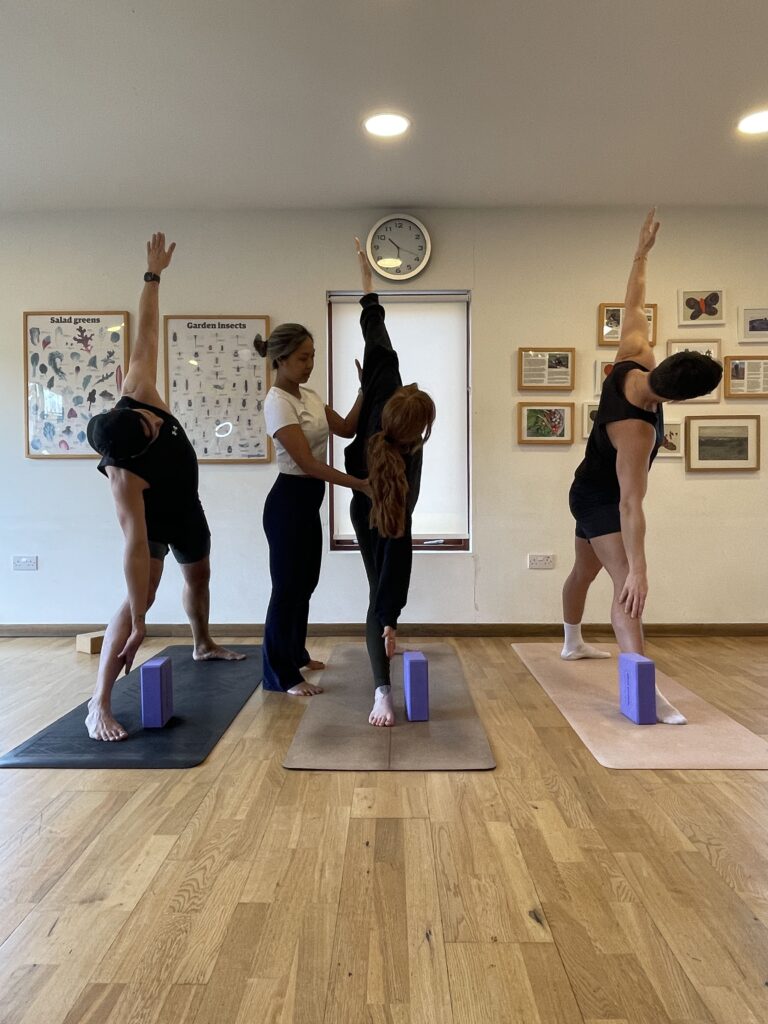
- The teacher has to teach to the middle. They can’t stop every few minutes to explain the foundations.
- You’re trying to follow a moving target. New pose, new name, new direction… and suddenly you’re two beats behind.
- You can’t tell if you’re doing it “right”. Which usually means you either push too far… or hold back and never build confidence.
- You don’t build momentum. You attend when you can, but there’s no progression — so it’s hard to feel improvement.
A beginner course is different. It’s built like a pathway.
What a beginner yoga course actually gives you (that drop-ins don’t)
A proper beginner yoga course isn’t just “an easier class”. It teaches you the things that make yoga feel good and make it stick:
1) Foundations and alignment (without overcomplicating it)
I’m big on alignment — not in a strict, scary way — but in a “let’s help your body understand what’s happening” way.
When you learn the foundations, yoga stops feeling like guesswork.
2) Confidence in the most common yoga poses
So when you hear things like downward dog, warrior II, child’s pose — you know what’s being asked, and you can adjust yourself.
3) Breath + pacing that suits real beginners
You learn how to move with breath in a way that feels steady, not frantic.
4) Consistency (the thing that creates results)
A course gives you a rhythm — and that’s where strength, mobility, balance and calm actually come from.
What to expect in my beginner yoga course in South London
My signature beginner course is Explore Yoga — and it’s designed for people who are:
- totally new
- returning after a break
- nervous in big classes
- or wanting to learn properly rather than just “getting through” a class
Here’s what makes it different:
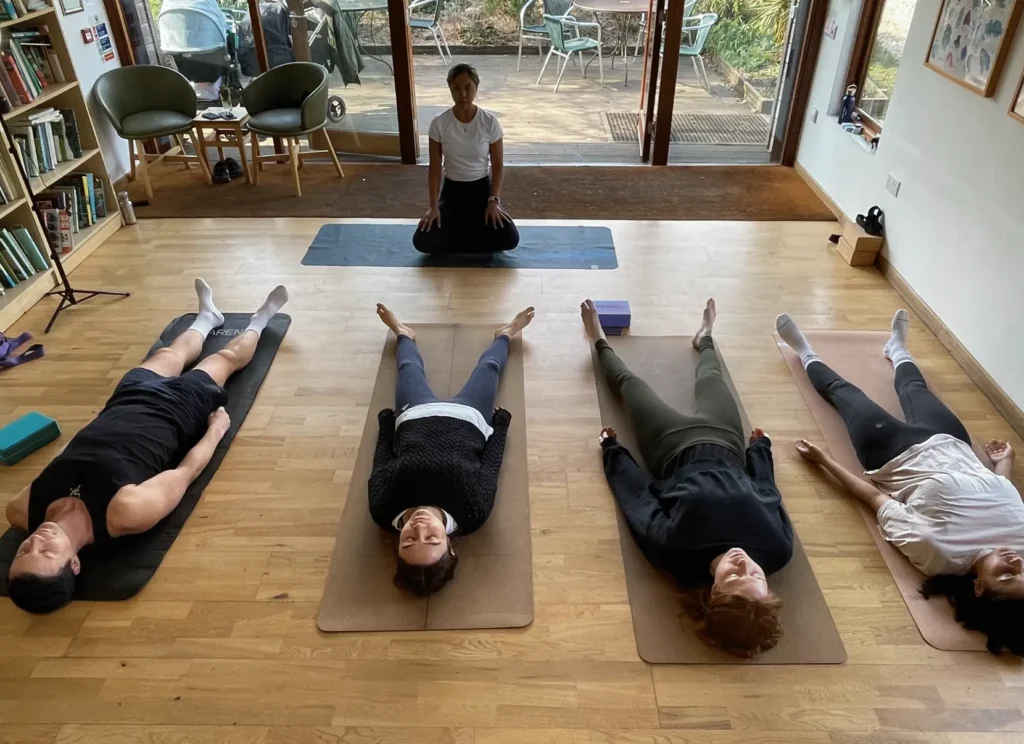
Small group learning (so you’re not just a face in the room)
I keep it intentionally small so you can get personal guidance and feel seen.
A calm, structured progression
We build week by week — no rushing, no “you should already know this”.
Supportive teaching (no shouty fitness vibes)
You’ll be guided, not performed at.
A focus on feeling, not “looking good”
It’s not about the shape. It’s about what the pose is doing in your body — and how to make it work for you.
If you want to see the current dates and details, start here: Explore Yoga Beginners Course
(And if you’re not ready yet, I’ve got you — keep reading.)
“But I’m not flexible / I’m not fit / I’ll be the worst one there…”
I have heard many reasons for giving up or not starting yoga …. so let’s gently clear a few things up.
“I’m not flexible”
Perfect. Yoga is a practice you do to build mobility and strength over time — not a test you need to pass before you arrive.
“I’m worried I’ll look silly”
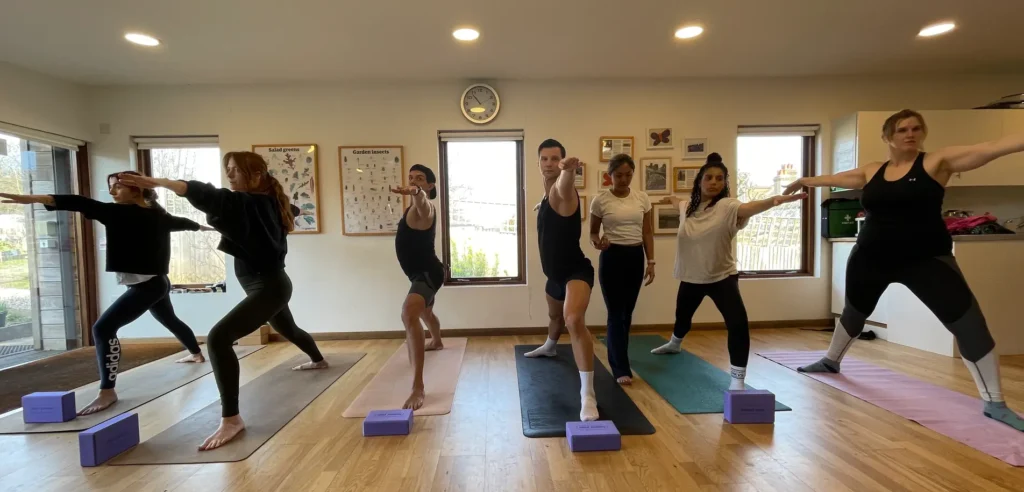
Most beginners feel that. The difference is: in a beginner course, everyone is learning. That’s the point. There’s a kind of relief in that. Many of my classes have ended up with chats and giggles – togetherness rather than pointing out differences.
“I’ve tried yoga before and didn’t love it”
That doesn’t mean yoga isn’t for you — it might just mean the environment wasn’t built for the level you are at. A lot of people need foundations first. Did you try more than one class/teacher?
“I don’t want anything too spiritual”
I totally understand that. Yoga philosophy is not a religion, nor is it intended to be. I weave in breath and grounding in a down-to-earth way. No pressure to be a certain type of person to belong in the room.
“My doctor tells me I need to start yoga…but I haven’t got around to it yet”
What are you waiting for ? Nothing is more important than your health.
“I don’t think I am patient enough for yoga. I need something more heart-pumping”
There are many types of yoga – including the heart pumping kind which I actually specialised in – Ashtanga – however, you wouldn’t “run before you can walk”, so I would recommend building on your foundations so you can recall popular poses and breathing techniques allowing you to keep up in a more “heart-pumping” class in future.
How to choose the right beginner yoga course in London
If you’re comparing options (Triyoga, MoreYoga, independents, community centres, gyms…) here are a few green flags to look for:
 Green flags
- It’s explicitly a beginner course, not just “all levels”
- There’s a clear structure (what you’ll learn / what changes week to week)
- The teacher offers options and modifications
- You feel like you can ask questions
- The vibe is friendly and human, not intimidating
 Red flags (for beginners)
- “All levels welcome” with no mention of foundations
- Very large class sizes with little individual support
- Rushing through sequences without explanation
- An emphasis on advanced poses early on
Not sure you’re ready? Start here (free)
If you’re curious but not ready to commit to a course yet, I made a free starter option:
Start Slow: A 7-Day Journey into Yoga
It’s gentle, beginner-friendly, and designed to help you build confidence from home.
You can join here: Start Slow (Free) It’s the easiest way to stop overthinking it and simply begin.
If you’re in South London, here’s your steps
If you’re around Brixton, Tulse Hill, Herne Hill, Dulwich and you want a supportive place to start:
-
- Try Start Slow first (free + no pressure)
-
- Then join Explore Yoga if you’re ready to learn in a small group and build real confidence
Quick links
-
- Explore Yoga Beginners Course:
/explore-yoga-beginners
- Explore Yoga Beginners Course:
-
- Group Classes:
/group-classes
- Group Classes:
-
- Private Yoga:
/private-yoga
- Private Yoga:
If you’re not sure which is best, you can always message me — I’ll point you in the right direction like a normal person, not a sales robot.